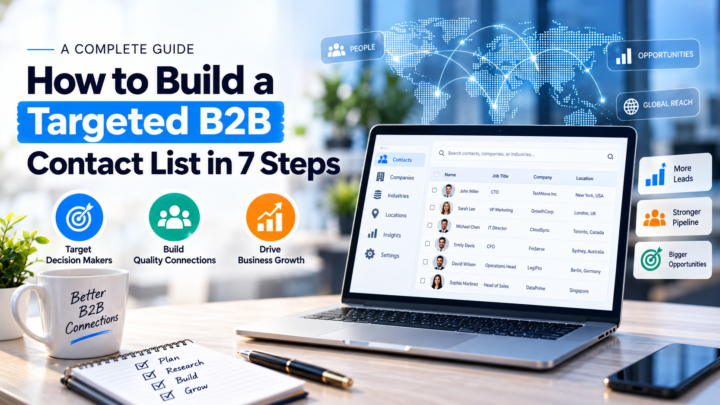

To get a verified automotive industry email list, define your target segment (OEMs, dealerships, parts suppliers, or fleet managers), choose a reputable data provider (Lake B2B, B2b Data Partners), run every record through real-time email verification, check compliance status (GDPR/CAN-SPAM), and test a small sample segment before scaling outreach. Skipping verification is the single biggest cause of high bounce rates and damaged sender reputation.
Step-by-Step Process to Build a Verified Automotive Industry Email List
Step 1: Define Your Target Segment First
Before touching any tool or vendor, get specific about who you actually need to reach. “Automotive industry” is too broad to build an effective list around narrow it down to one or more of these segments:
- OEMs and manufacturers — procurement, engineering, or partnerships contacts
- Dealership groups — GMs, sales directors, service managers, F&I managers
- Parts and aftermarket suppliers — purchasing and supply-chain contacts
- Fleet management companies — fleet directors, operations managers
- Auto repair and service centers — owners, service advisors
The tighter your segment, the higher your open and reply rates will be once outreach starts. A 3,000-contact list of service managers at independent dealerships will consistently outperform a 30,000-contact list labeled simply “automotive.”
Step 2: Choose a Verified Data Source (Not a Scraped List)
Avoid cheap, one-time “bulk automotive email list” downloads sold on marketplaces — these are almost always scraped, outdated, and carry bounce rates of 15–25% or higher, which can get your domain flagged as spam.
Step 3: Filter by Firmographic and Role-Based Criteria
Once inside your chosen platform, apply layered filters rather than exporting everything:
- Industry/NAICS code — automotive manufacturing, dealership, or repair services
- Company size — dealership revenue band or employee count
- Job title/seniority — decision-makers only (GM, director, VP) unless you specifically need operational contacts
- Geography — region, state, or country depending on your sales territory
- Technology or intent signals — if available, target accounts actively researching relevant solutions
This step is where most of your list quality is determined broad, unfiltered exports are what create the “large but useless” lists that hurt deliverability.
Step 4: Run Real-Time Email Verification
Even reputable providers can include stale records. Before any list touches your outreach tool, run it through a dedicated verification pass:
- Export the raw list from your data provider
- Run it through a verification tool (many providers like UpLead do this natively; otherwise use a third-party verifier)
- Remove or quarantine anything flagged as invalid, catch-all, or risky
- Keep only contacts marked valid/deliverable
This single step typically cuts bounce rates from double digits down to under 5%, which directly protects your domain and sender reputation.
Step 5: Check Compliance Before You Send
A verified email doesn’t automatically mean a compliant one. Before launching any campaign:
- Confirm the provider’s data collection method is opt-in or legitimately sourced (not scraped from public pages without consent basis)
- For contacts in the EU/UK, confirm GDPR legal basis for processing
- For U.S. contacts, ensure your outreach includes CAN-SPAM requirements (physical address, unsubscribe link, accurate sender info)
- Keep a record of your data source and purchase date in case of an audit or complaint
Skipping this step is a legal and reputational risk, not just a technical one.
Step 6: Test on a Small Sample Segment First
Before committing your full budget or sending to the entire list, test on 200–300 contacts:
- Send from a warmed-up domain/inbox, not a brand-new one
- Track open rate, bounce rate, and reply rate over 5–7 business days
- Benchmark against healthy ranges: bounce under 5%, open rate 20%+, reply rate 3%+ for cold outreach
If bounce rates come back high on the sample, pause and re-verify the full list before scaling this prevents damaging your domain reputation across the entire campaign.
Step 7: Set Up Your Sending Infrastructure Correctly
Even a perfectly verified automotive industry email list will underperform without proper sending setup:
- Authenticate your domain with SPF, DKIM, and DMARC
- Use a dedicated sending domain (not your primary company domain) for cold outreach
- Warm up new domains gradually over 2–3 weeks before full-volume sending
- Stagger sends (avoid blasting the entire list at once) to protect deliverability
Step 8: Maintain and Re-Verify Regularly
Automotive industry contacts change roles frequently, especially at the dealership level. Re-verify your list every 60–90 days, and remove hard bounces and unsubscribes immediately after each campaign rather than letting them accumulate.
Frequently Asked Questions
How do I know if an automotive email list is verified?
Ask the provider directly about their verification process and refresh frequency and independently re-verify a sample before purchasing at scale.
Can I build my own automotive industry email list instead of buying one?
Yes — through LinkedIn Sales Navigator prospecting, industry event attendee lists, or gated content on your own site, though this is slower than using a data provider.
How often should a verified automotive email list be refreshed?
Every 60–90 days, given how frequently roles turn over in dealership and service-department positions.